
New Delhi [India], November 20: In the recent past, creator equipment was something purchased only for personal use. One might have watched a few tutorials, bought a ring light and tripods, and begun shooting. This picture is no longer correct. The creator base in India has grown fourfold from 2020 and stands at 4.12 million today, of which about 15% of active creators have registered their businesses. Once content became the means of reaching customers, the camera, computer or software became a business expense as well.
A hobbyist purchases equipment once and uses it whenever he is inspired. A team, which publishes every day, acts differently. It needs to be able to create content with the same kind of light on Monday and on Friday, and has to be delivered promptly.
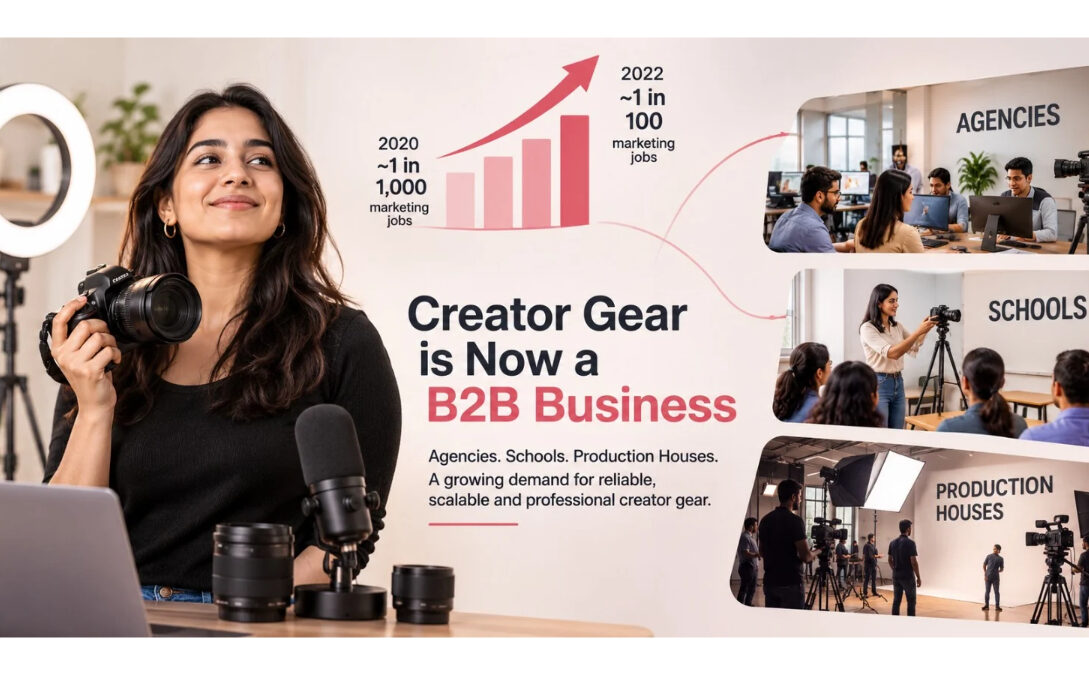
The transition can be seen in the staffing patterns. Instead of taking up influencers on a per-campaign basis, brands are employing them directly. In the year 2020, creator positions occupied approximately one in 1,000 marketing job opportunities; in the year 2022, creator jobs occupied approximately one in 100 job opportunities. All such employees will need to be equipped to do their jobs.
Archisman Misra, Founder & CEO of StudioBackdrops says:
“Creator gear has stopped being a hobby a long ago. When content is used by businesses to grow, the gear used for content creation becomes infrastructure, and infrastructure has to be dependable, accessible and affordable.”
Agencies and studios: owning the means of production
The major networks have taken note of this trend. Publicis Groupe India has established a content studio, Dentsu has combined over ten internal studios into one content engine, and WPP has consolidated its production facilities into a single platform. What all these companies have in common is the idea of control. Producing content in-house provides better control, speed of production and better consistency in production, while since the same amount of lighting, sound and studio equipment needs to be bought anyway, producing in-house is cheaper in the long run.
Smaller players have also considered the idea. Hourly rental content studios are being established in Mumbai and podcasting studios can be rented from ₹1,499 per hour. Each studio is a for-profit entity that continuously buys industry equipment.
Schools: teaching the craft requires the tools
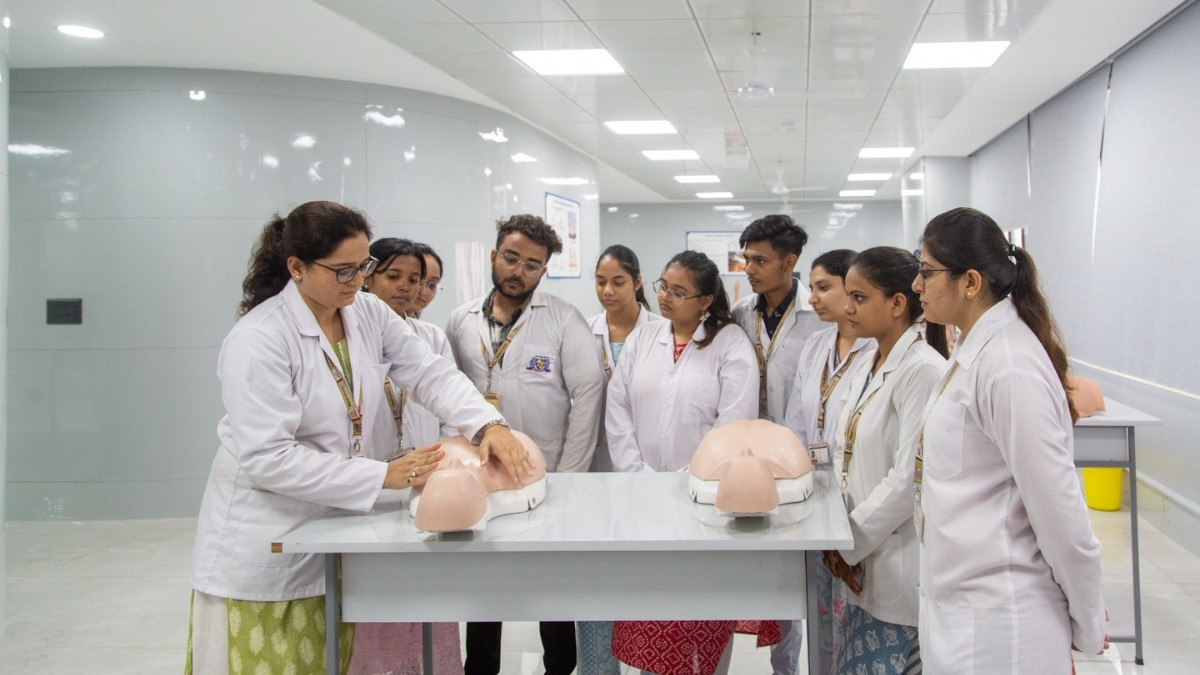
The field of education is the latest sector in the line of potential buyers. The Union Budget has allocated ₹250 crore for creation labs in as many as 15,000 schools and 500 universities with courses covering photo art, cinematography and video production. At this point, labs are still being planned and specifications of what will be bought haven’t been revealed, but the purpose is evident. Once creation becomes a learnt skill, educational institutions will have their challenges, including the absence of standard kits that are easy to maintain and replace.
Production houses rent, but someone still buys
Big productions have traditionally rented equipment instead of buying it. This doesn’t mean that demand has disappeared; it has simply transferred to rental companies instead. The revenue of Moving Media Entertainment, a camera rental firm catering to agencies and producers, increased by 59% in FY25. The amount of revenue derived from repeat customers is around 61%. Repeat clients are an example of what the B2B market consists of.
The real constraint is supply, not demand
The demand exists, but the supply chain has not caught up. One report on the industry refers to creator equipment as being fragmented. There aren’t any dominant retailers, mostly unbranded regional listings, as well as virtually no options for studio rentals outside of the major cities.
Then there are importation costs.
“Imported goods could have costs increased by 50-70% when they reach customs,” Misra says. “It will be difficult for a single creator to absorb these expenses, and even harder for a team that buys the appliances in bulk.”
Thus, agencies, colleges, and chains of studios can’t set up a workflow based on this. What these buyers require is the reliable supply, the catalog large enough to allow a vendor to cover the shooting need, uniform quality, as well as invoicing and delivery that go beyond the mere metropolitan area.
“An artist can live with a delivery that went awry. A studio, agency, or university cannot,” states Misra. “A crew that films regularly relies on the same lighting, the same settings and the same quality of equipment, plus a vendor that is able to supply what’s needed in the shortest time possible. It is almost ten years’ worth of work, establishing a catalogue and a delivery network, so no worries on behalf of light equipment preventing anyone from moving as fast as they want.”
Where StudioBackdrops fits
Founded in 2016, StudioBackdrops has developed its supply chain as a seller of backdrops. Over the years the company has expanded its catalog, which originally carried around 150 items, to more than 6,500 unique SKUs delivered to over 20,000 uniquely addressed customers. Combining globally recognized brands with the company’s own in-house labels allows StudioBackdrops to control the prices and availability of products. Moreover, the expansion offline continues as well through camera shops and seminars, because people want to touch the equipment before they buy it.
Alongside with that SBD has developed a knowledge integrated system, due to SBD Creators initiative which aims to help with equipment selection, lighting and workflow in filmmaking and photography.
“Today talent cannot only be found in the cities, and people, who are developing their content business in smaller towns very often have the least access to experience,” states Afreen Zeb, the CMO of StudioBackdrops. “Purchasing the equipment is only a small part of the problem. It is just as important to know what to buy, how to light the scene and how to organize the process. This is why SBD Creators is placed right next to the catalogue and provides mentoring in local languages and practical tips.”
According to Afreen,
“the same holds true for either solo creators or small groups, as the successful ones see their setups as part of the business and strive to make it easier to succeed in this regard.”
The following step forward will largely depend on the equipment available in labs and whether or not studio agencies buy locally and if rental spaces get spread around cities. Still, a trend can already be seen here. The creator economy used to rely on independent creators finding their audiences, whereas its second layer features a number of studios, schools, agencies, and suppliers that are responsible for making it possible for creators to replicate this work while equipment belongs to the infrastructure of this layer.
For more information, please visit: https://studiobackdrops.com/
If you object to the content of this press release, please notify us at pr.error.rectification@gmail.com. We will respond and rectify the situation within 24 hours.