
Experts say research must move beyond publication numbers and reach policy, practice and patients
New Delhi [India], September 8: India’s opportunity in health research is no longer simply about generating more evidence. The greater challenge and opportunity is ensuring that evidence translates into better patient outcomes, stronger health systems and policies that respond to the needs of communities.
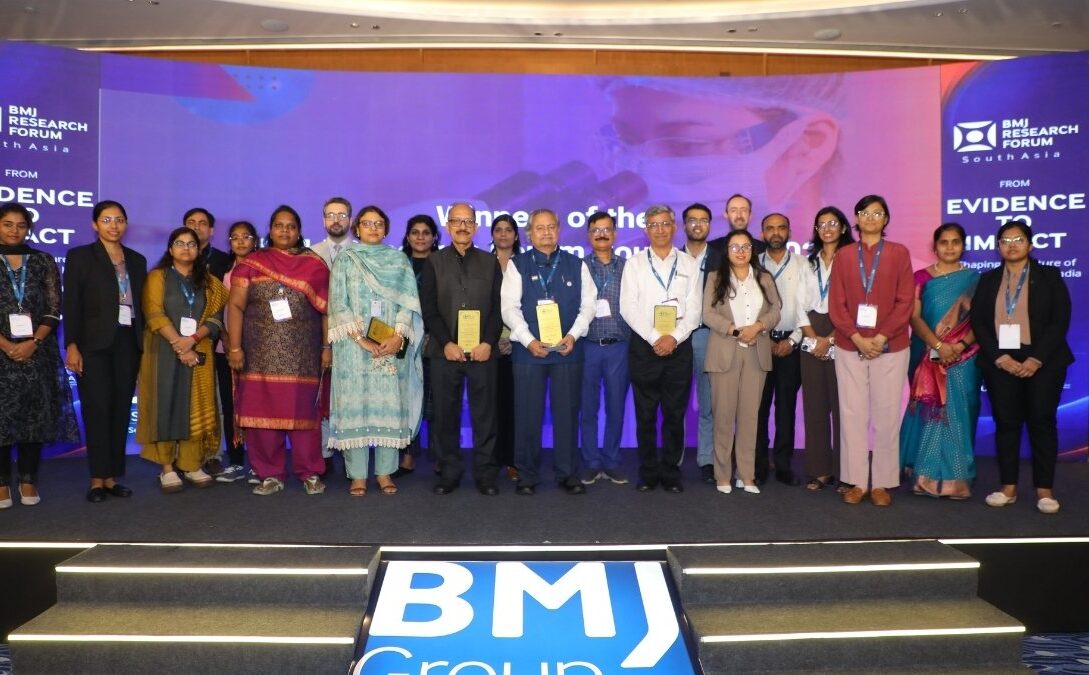
That was the central message of the BMJ Research Forum South Asia 2026, held in New Delhi under the theme “Driving Real-World Impact from Health Research in India”. The Forum brought together researchers, clinicians, healthcare leaders, policymakers, editors, funders, and community voices to examine how India can close the gap between evidence and action.
The question running through the discussions was simple but fundamental: what changes because of the research we do?
The Forum opened with a keynote by Major General (Prof) Dr Atul Kotwal, followed by a leadership perspective from Dr B S Ajaikumar, Founder and Chairman of HealthCare Global Enterprises. Across the sessions, speakers explored what it would take to ensure that research does not end with publication, but becomes part of better decisions, better care and better health outcomes.
A flagship discussion on translating research into practice, moderated by Dr Vikram Datta, brought together healthcare and research leaders including Lt Gen Dr Madhuri Kanitkar, Dr Arun Singh, Dr Pramod Garg and Dr B Unnikrishnan.
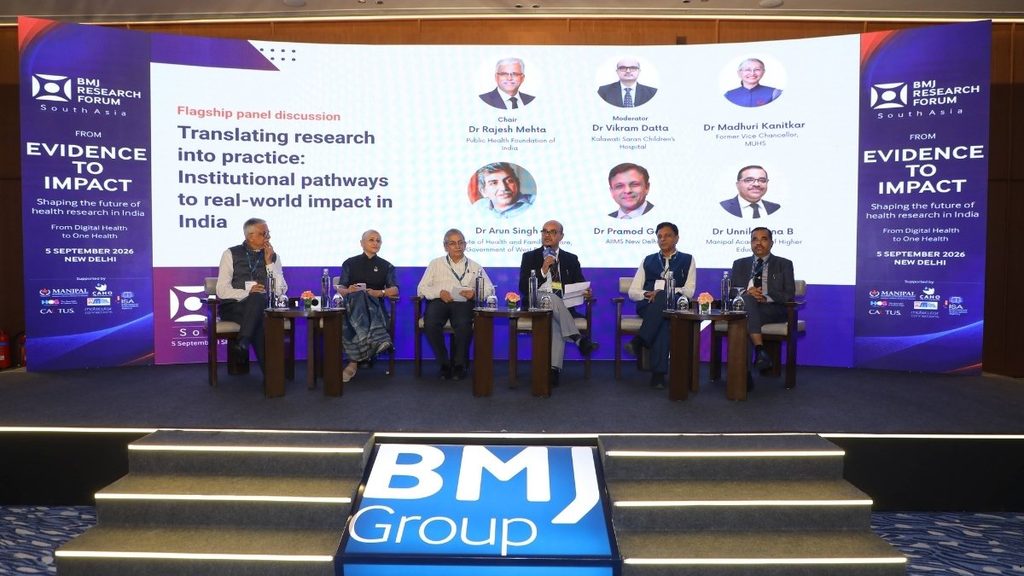
Dr Vikram Datta, Director Professor and Medical Superintendent, Kalawati Saran Children’s Hospital, Lady Hardinge Medical College, New Delhi, said:
“For a young researcher, it is important to understand national frameworks and guidelines, but equally important to understand what happens at the point of care. The question we should be asking is not only whether we have done good research, but how that research will reach the community and the setting for which it was intended.”
Lt Gen Dr Madhuri Kanitkar, Former Vice-Chancellor, Maharashtra University of Health Sciences, said:
“India contributes to nearly a sixth of the world’s population. Strengthening our contribution to health research could have a significant impact, not only in India but on health systems globally. We have seen what India can achieve through vaccines and generic medicines, and are now advancing in areas such as cell and gene therapy. Bringing researchers, policymakers, healthcare institutions and other stakeholders together is essential to translate research into solutions that work in the real world.”
India’s existing health and research infrastructure provides an important foundation for this ambition. Discussions referenced government programmes and initiatives including the Ayushman Bharat Digital Mission (ABDM), Ayushman Arogya Mandirs, PM-ABHIM, the Anusandhan National Research Foundation (ANRF) and One Nation One Subscription, while emphasising the importance of connecting these developments with research that can be implemented in real-world settings.
But translating research into impact also requires asking a more fundamental question: who is the research ultimately intended to serve?
A dedicated community voice panel, chaired by Dr B S Garg, brought perspectives on quality, equity and access, with particular attention to vulnerable and marginalised populations.
Dr Garg, Secretary, Kasturba Health Society and Director, Dr Sushila Nayar School of Public Health, said:
“Health research has to respond to the priorities of the people it is meant to serve. There are significant questions around quality, equity and out-of-pocket expenditure, particularly for vulnerable and marginalised communities in peri-urban, rural and tribal areas. Bringing these concerns into health research and policy is essential if universal health coverage is to become a reality.”
The Forum also examined the changing research landscape, including AI, research integrity and global credibility. Speakers highlighted the importance of governance, transparency and rigorous evidence as new technologies reshape how research is designed, conducted and communicated. There was also a call to expand research capacity beyond leading institutions to tier 2 and 3 cities and strengthen collaboration across sectors and geographies.
The Forum discussions highlighted a number of priorities for India’s health research system, including a greater focus on patient outcomes, stronger implementation research, wider research capacity, early engagement with policymakers and communities, better research integrity and responsible use of AI. The discussions also called for dedicated mechanisms to help move research findings into practice.
The message of research translating into meaningful change was reflected beyond the Forum itself through the BMJ Awards South Asia 2026, which followed the Research Forum and recognised individuals and teams whose work is making a tangible difference across healthcare.
Among the recognised initiatives were the Carbon-SUSTAIN study, which received the Sustainability and Climate Action Award; a phased implementation of a surgical safety care bundle, recognised with the Quality Improvement Award; and a digital scoring system for COPD control, which received the Digital Innovation Award. Other awards recognised work spanning primary care, maternal and child health, medical education, research and lifetime contribution to healthcare.
The Research Paper of the Year awards further demonstrated the breadth of work being recognised, including research on the YCMAP intervention among adolescents after self-harm in Pakistan, published in The BMJ, and research on the impact of the indigenous Rotavac rotavirus vaccine in India’s Universal Immunization Programme during 2016–2020, published in Nature Medicine.
Dr Prashant Mishra, Managing Director, BMJ India & South Asia, said:
“Across the BMJ Research Forum, the Medical Education Leadership Round Table, and the BMJ South Asia Awards, we are bringing together three essential dimensions of progress in Indian healthcare: research that creates real-world impact, building the capabilities of tomorrow’s healthcare workforce, and recognising those already making a difference. Together, these initiatives reflect BMJ’s commitment to putting evidence, learning and professional excellence at the heart of better healthcare and helping shape a healthier India for 2030 and beyond.”
Together, the Research Forum and Awards underscored a shared imperative: research must be judged not only by what is published, but by what it changes.
Don’t just fund research, fund its translation. Don’t just measure publications, measure lives changed. And don’t wait for evidence to arrive at policy’s door bring policy into the room from day one.
If you object to the content of this press release, please notify us at pr.error.rectification@gmail.com. We will respond and rectify the situation within 24 hours.