
Gurugram (Haryana) [India], June 11: For the past decade, consumer packaged goods (CPG) companies have been sold a dangerous illusion: that more data equals better decisions. C-suite executives have poured millions into digital transformation, arming their teams with Sales Force Automation (SFA), Distributor Management Systems (DMS), and endless visualization dashboards. Yet, despite having “perfect” data, a massive execution gap persists. Progress charts highlight what happened yesterday, but they fail to diagnose root causes or dictate what must happen today.
In this environment of fragmented, siloed tools, commercial strategy continues to rely heavily on the subjective discretion of middle managers. This isn’t just inefficient; it is actively costing brands market share. The smartest executives are quietly recognizing that visibility is no longer a competitive advantage – it is merely table stakes. The real battleground has shifted from passive analytics to autonomous execution.
The Execution Gap: How Industry Leaders Are Reacting
The financial toll of relying on legacy, dashboard-driven strategies is staggering. Current market data reveals that 0.5% to 1% of total revenue silently leaks through compounding gaps in distribution, pricing, assortment, and supply. For a ₹5,000 Crore brand, that is a ₹50 Crore blind spot – recoverable capital left on the table due to execution delays and human guesswork. Historically, companies have attempted to plug these leaks by spending ₹2 Crore to ₹5 Crore on periodic consulting audits, only to receive static PDF deliverables that offer no continuous feedback loop.
Industry leaders are waking up to this reality and rapidly pivoting. According to recent data, 71% of CPG leaders reported adopting AI in at least one core business function, a massive leap as the industry abandons scattered pilot programs. The results speak for themselves: 69% of companies aggressively deploying AI report revenue growth tied directly to these initiatives, and 72% see a distinct decrease in operating costs.
But the most critical shift is the move toward “Agentic” or autonomous AI. Research indicates that while AI agents accounted for 17% of total AI value recently, that share is predicted to surge to 29% by 2028 as high-frequency decisions—pricing, trade spend, and retail execution—are handed over to intelligent systems. The C-suite mandate is clear: the era of paying for static diagnostics is over. If your organization is not actively deploying systems that can automatically detect anomalies, diagnose root causes, and push immediate corrective actions to the field, you are already falling behind.
The Architectural Edge: Why AI-Native RTM is the Undeniable Future
The transition the industry is undergoing is not merely a software upgrade; it is a fundamental architectural shift. The outdated “AI-First” approach involved bolting intelligent features onto existing, siloed tools – using route optimization here or image recognition there. But an AI tool doesn’t care if a promotional strategy makes sense across the broader P&L; it only cares about its specific function.
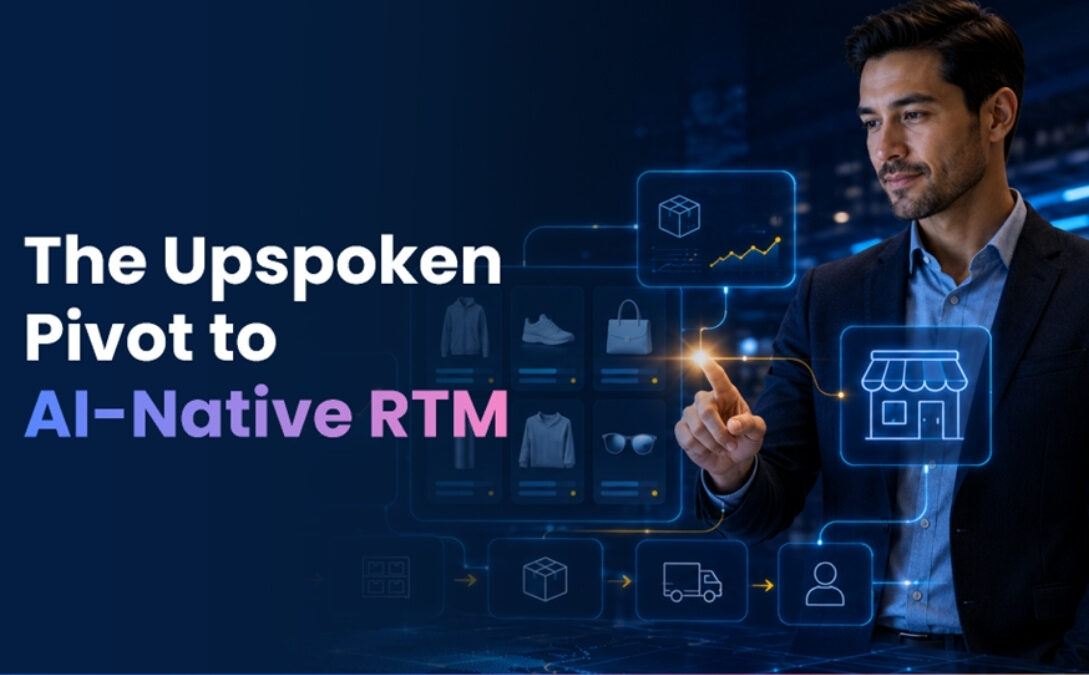
The future belongs to AI-Native Route-to-Market (RTM) platforms. FieldAssist is spearheading this transformation with an Always-On Commercial Strategy Agent. Rather than acting as a passive repository of data, this multi-agent architecture operates as a digital strategy consultant embedded at every level of the organization. Powered by 17 specialist agents tracking 150+ precise KPIs, the platform continuously monitors the execution stack.
The AI-Native edge lies in its continuous reasoning loop:
Detect: It establishes baselines to flag deviations instantly across 150 KPIs at every grain, from the individual outlet and SKU to the territory and distributor level.
Diagnose: It walks the P&L decomposition tree, cross-correlating data across domains to identify the true root cause rather than just presenting symptoms.
Size: It attaches a quantifiable rupee impact to every anomaly, identifying exactly how much revenue is lost, how much margin is leaked, or how much cash is trapped.
Act: Insight without action is just overhead. The platform pushes targeted tasks, alerts, scheme changes, and escalations directly into the SFA, DMS, and B2B execution layers.
Learn: By tracking outcomes, it determines which interventions worked and continuously updates its playbooks to create compounding, enterprise-wide intelligence.
This is the platform consulting firms cannot match. By connecting boardroom strategy with the retail shelf, FieldAssist removes the guesswork that plagues legacy brands. For C-suite leaders, the choice is clear: adapt to a decision-centric, AI-native RTM model, or continue to lose revenue to competitors who already have.
If you object to the content of this press release, please notify us at pr.error.rectification@gmail.com. We will respond and rectify the situation within 24 hours.